Is a 15-month lease with more weeks free a better deal?
Sometimes, but it usually depends on the 24-month horizon rather than just the initial term. Choosing between a 12 vs 15 month lease requires looking past the immediate discount. Whether you are a homeowner needing temporary housing or a business owner setting up a corporate lease, comparing these offers takes precision.
We operate as a professional service team, and we regularly see property managers throwing in 8 weeks free on a 12-month lease or 10 weeks on a 15-month term. The extra weeks are spread across more months, though, and the longer lease changes when your renewal happens. Realtor.com reported in August 2026 that over 43% of US rental listings offered some type of concession.
Our team considers the 24-month total as the truly fair comparison. Let’s look at the data and walk through the exact steps to evaluate any of the current specials you find:
- Calculating your true net effective rate.
- Modeling the complete 24-month cost.
- Timing your future renewal month for better bargaining power.
Step 1: Net effective for each term
Calculate the net effective rent by subtracting the total value of your free weeks from the total base rent. This gives you a true monthly average for your initial lease term.
$1,500 base. 8 weeks free on 12 months vs. 10 weeks free on 15 months.
| 12 months, 8 weeks | 15 months, 10 weeks | |
|---|---|---|
| Free rent | $2,769 | $3,462 |
| Net effective | $1,269 | $1,269 |
| Discount off base | 15.4% | 15.4% |
In this case, the net effective rate comes out about the same. The extra 2 weeks pay for the extra 3 months.
Property management platforms like Yardi and RealPage calculate this net effective rent automatically to market their units. They focus on this lower number, but your actual monthly payment depends on if the free weeks are prorated or given up front.
We find that the decision comes down to the 24-month view and your specific housing timeline.
Step 2: The 24-month total
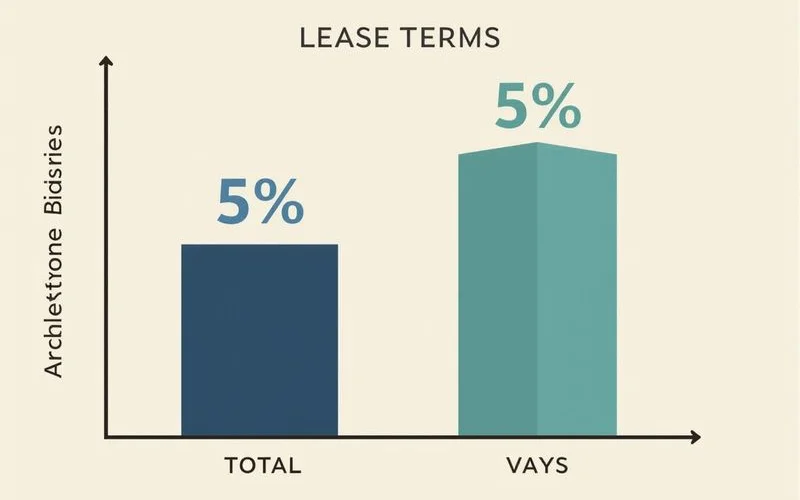
Factor in your likely renewal increase to see the long-term cost. A longer initial lease locks in the discounted rate longer, shrinking the number of months you pay full market price.
After the first lease ends, you renew at base rent plus any property increase. Over 24 months, the math shifts.
| 12 months, then 12 at renewal | 15 months, then 9 at renewal | |
|---|---|---|
| First-lease rent | $15,231 | $19,038 |
| Renewal months at 0% | 12 × $1,500 = $18,000 | 9 × $1,500 = $13,500 |
| 24-month total at 0% | $33,231 | $32,538 |
| Renewal months at +3% | 12 × $1,545 = $18,540 | 9 × $1,545 = $13,905 |
| 24-month total at +3% | $33,771 | $32,943 |
Recent 2026 data shows average US apartment renewal increases sit around 3% to 4%. This makes the 3% jump in our model a highly realistic benchmark for your planning.
What it means for you: the 15-month lease saves about $693 over 24 months at 0% and about $828 at +3%. You spend 3 more months at the discounted rate and 3 fewer at full renewal rent, while standard fees remain the same in both scenarios.
We recommend tracking three specific variables when comparing long-term options:
- Base rent jump: The new rate is calculated from the $1,500 base, not the $1,269 net effective rent.
- Months at full price: The 15-month lease limits your exposure to the new higher rate.
- Hidden fees: Always check if amenity fees increase during year two.
Rule of thumb
If net effective is about equal, the longer discounted term usually wins over 24 months, as long as you’ll stay.
Step 3: Renewal month timing
Your start month dictates your renewal month, which directly affects your future negotiating power. Signing a 15-month agreement pushes your renewal into a completely different season than a standard one-year term.
Your renewal month always follows your start month. Summer is the peak leasing season in Austin and across the US, while winter remains the slow period.
Consider how lease length shifts your timeline:
- 12-month timeline: A lease signed in November renews in November.
- 15-month timeline: A lease signed in November pushes your renewal out to February.
Our team closely watches these seasonal shifts because they alter your bargaining power.
Property managers face higher vacancy rates in the winter, making them more willing to negotiate. Moving your renewal date into a slow month can save you hundreds of dollars in year two.
Our winter leasing note covers the season in more detail.
Step 4: Early-exit cost
A longer lease dramatically increases your financial risk if you need to move out early. Always read the early termination clauses before committing to a 15-month term.
The longer timeframe carries more exposure if your business needs or housing plans change unexpectedly.
We always advise our clients to check three specific items in the contract:
- The buyout fee and required notice period.
- Whether the concession must be repaid on an early exit.
- Whether payback is full or prorated based on time lived there.
Many US apartments use standard forms, like the widely adopted Texas Apartment Association (TAA) lease. Under a standard 2026 TAA agreement, breaking your contract often triggers a reletting charge of up to 85% of one month’s rent. This fee only covers the landlord’s marketing costs, meaning you still owe regular rent until a new tenant takes over.
Some buildings offer an early termination buyout instead, typically costing one to two full months of rent. If there is a real chance you will move before 15 months, the 12-month lease may cost less in the end, even if its 24-month total is theoretically higher.
See our guide on concession payback clauses for a detailed breakdown of these penalties.
Run your own numbers
Use a dedicated 12 vs 15 month lease calculator to model your specific options before signing any agreement. Comparing both the net effective rate and the 24-month horizon ensures you secure the most cost-effective deal. The 12 vs. 15 month calculator on our tools page uses this exact method to run the math.
Our guide on the renewal jump explains why renewals always price from the base rent rather than your discounted rate. Analyzing multiple complex offers can get overwhelming quickly.
Send us both of your lease options, and our team will provide:
- The 24-month totals at 0% and +3% with fees.
- Your exact net effective rent calculation.
- Your new renewal month under each scenario.
Start running your numbers today, or contact us directly so you can sign your next lease with confidence.